
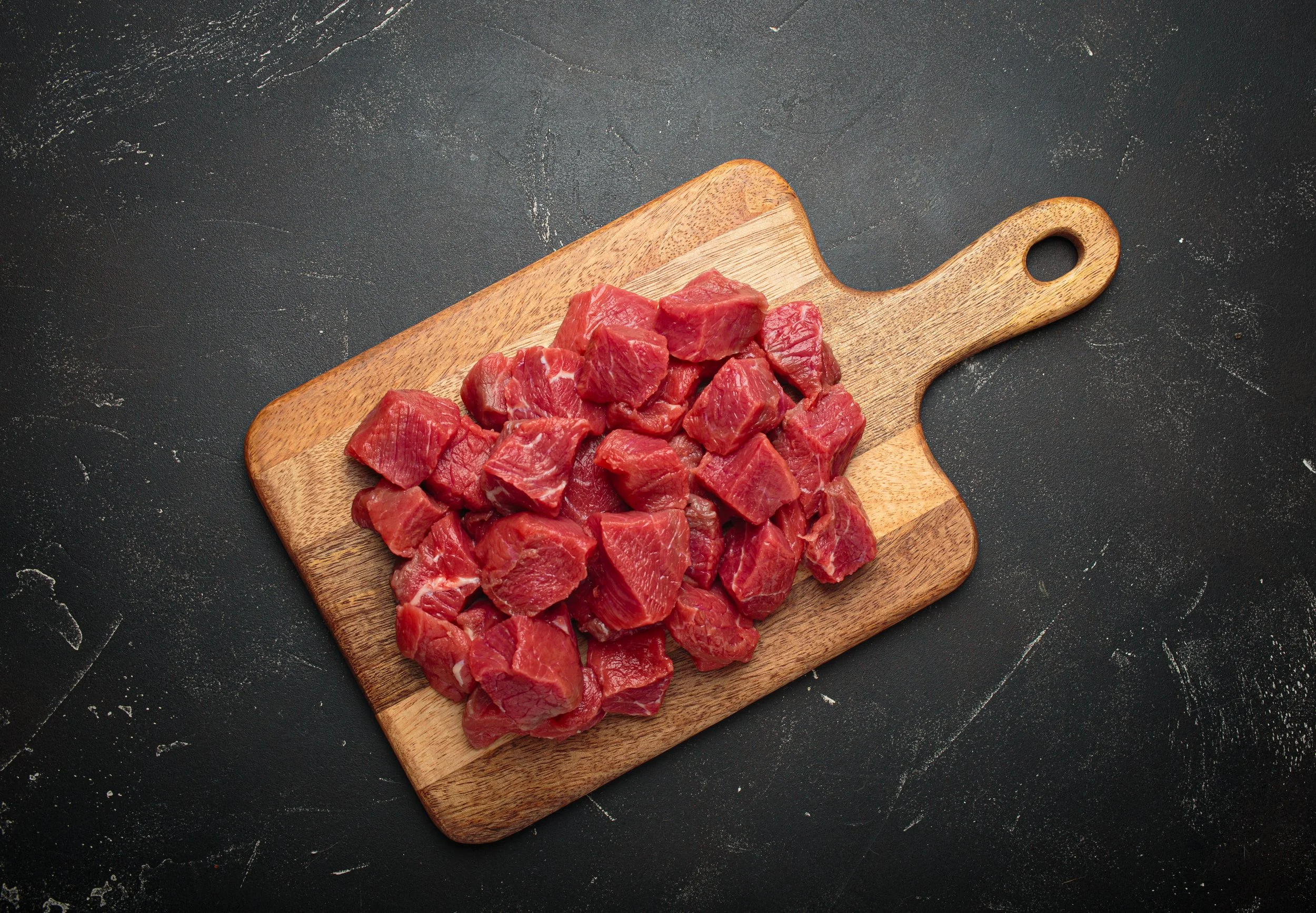
Nutrition science is often accused of being “controlled by Big Pharma.” But if we’re going to have a serious conversation about industry influence, it’s worth examining where funding patterns actually exist, and how they shape research outcomes.
A recent independent analysis of clinical trials investigating unprocessed red meat and cardiovascular disease risk factors provides useful context (1).
This article explores what the researchers found, what it does (and doesn’t) mean, and how to interpret industry-funded nutrition research more broadly.

What the study investigated
The authors – based out of Universidad Francisco de Vitoria in Madrid, Spain – conducted a systematic assessment of clinical trials examining the relationship between unprocessed red meat consumption and cardiovascular risk factors.
Those cardiovascular disease risk factors included changes in blood lipids, blood pressure, and inflammatory markers.
Rather than simply pooling outcomes, they analysed:
Funding sources
Author conflicts of interest
Comparator foods used in study design
Reported cardiometabolic outcomes
This allowed them to examine whether patterns in funding were linked with differences in study conclusions (by the way, the authors of this review declared no conflicts of interest or external funding).

A striking pattern in funding sources
Of the trials identified:
Around two thirds were funded by, or had ties to, the red meat industry
The other third were conducted independently of industry involvement
This is not unusual in nutrition science. Food industry funding is common because large-scale dietary trials are expensive. And, importantly, industry funding does not automatically invalidate research.
However, funding patterns can influence:
Research questions asked
Study design choices
Interpretation of results
These subtler mechanisms are often more important than outright bias.
Differences in reported cardiovascular outcomes
The analysis found that:

The majority of independently conducted studies reported unfavourable cardiovascular risk factor changes with higher red meat intake
A smaller number reported neutral effects
In contrast, industry-funded studies reported predominantly neutral or even favourable outcomes
None of the industry-funded trials reported unfavourable findings
This might look alarming at first, and many would come to the conclusion that the industry-funded researchers were fabricating their results to appease the funders. But that is very rarely the case in nutrition science. Instead, the key issue appeared to be how studies were designed.
Why study design matters more than funding alone
One of the most important methodological choices in nutrition trials is the comparator food. The analysis found that while independent studies typically compared red meat with plant proteins, most industry-funded red meat trials compared red meat with:
Other animal proteins
Refined carbohydrate foods
These comparisons are much more likely to make red meat appear neutral. In nutrition science, what you compare a food to is often more important than the food itself. This is why dietary pattern research frequently shows stronger associations than isolated food trials.
Industry influence extends beyond individual trials
Funding patterns in research also reflect broader structural realities. A recent analysis from Stanford University highlighted that investment in research and innovation for animal agriculture far exceeds that for alternative proteins, and lobbying power in this sector is also substantially greater (2).

This influences policy priorities, research agendas, and public messaging. Again, this does not imply misconduct, but it does shape the evidence landscape.
How does this fit with the wider research on unprocessed red meat?
Short-term clinical trials, the kind of studies included in this analysis, can help us understand biological mechanisms, but most evidence on long-term cardiovascular risk comes from large population studies. Across many countries and dietary patterns, higher intakes of unprocessed red meat have generally been linked with increased cardiovascular risk and less favourable cardiometabolic profiles.
For example, a 2020 pooled analysis of six cohort studies found that higher intake of unprocessed red meat was linked with significantly higher risk of cardiovascular disease and all-cause mortality (3). And a 2023 Oxford University meta-analysis of prospective cohort studies involving over 1.4M participants found that every 50g day of unprocessed red meat intake was linked with a 9% higher risk of ischemic heart disease (and that association was 18% increased risk for processed meat) (4).
This is in line with the findings of the meat industry-independent studies in the analysis, the majority of which found higher red meat consumption increased cardiovascular risk factors like blood pressure, blood lipids, and measures of inflammation.
How to interpret nutrition research more critically
When reading nutrition studies, it can help to consider questions like:
Who funded the research?
What foods were used as comparators?
Are outcomes mechanistic or clinical?
How does the study fit into the broader evidence base?
Single studies rarely provide definitive answers. Understanding the totality of evidence and methodological context is essential.
The bottom line
This isn’t about “pro- or anti-meat”. It’s about understanding how funding shapes research questions.
Nutrition science is shaped by many influences, including funding structures, research incentives, and public health priorities.
Recognising these dynamics allows for more informed interpretation of research findings, without resorting to simplistic narratives about bias or conspiracy.
References:
López-Moreno, M., Fresán, U., Marchena-Giráldez, C., Bertotti, G., & Roldán-Ruiz, A. (2025). Industry study sponsorship and conflicts of interest on the effect of unprocessed red meat on cardiovascular disease risk: a systematic review of clinical trials. The American journal of clinical nutrition, 121(6), 1246–1257. https://doi.org/10.1016/j.ajcnut.2025.02.030
Simona Vallone, Eric F. Lambin, Public policies and vested interests preserve the animal farming status quo at the expense of animal product analogs, One Earth, Volume 6, Issue 9, 2023, Pages 1213-1226, https://doi.org/10.1016/j.oneear.2023.07.013
Zhong, V. W., Van Horn, L., Greenland, P., Carnethon, M. R., Ning, H., Wilkins, J. T., Lloyd-Jones, D. M., & Allen, N. B. (2020). Associations of Processed Meat, Unprocessed Red Meat, Poultry, or Fish Intake With Incident Cardiovascular Disease and All-Cause Mortality. JAMA internal medicine, 180(4), 503–512. https://doi.org/10.1001/jamainternmed.2019.6969
Papier, K., Knuppel, A., Syam, N., Jebb, S. A., & Key, T. J. (2023). Meat consumption and risk of ischemic heart disease: A systematic review and meta-analysis. Critical reviews in food science and nutrition, 63(3), 426–437. https://doi.org/10.1080/10408398.2021.1949575